http://www.theguardian.com/media/2015/nov/14/how-fox-ate-national-geographic
Saturday, November 14, 2015

Inside Atlético Madrid: can the club go global?
http://www.ft.com/intl/cms/s/2/da99c814-88b2-11e5-90de-f44762bf9896.html#slide1

Atléti will also gain from a revolutionary change in Spanish football: clubs have just agreed to divide their TV money more equally. “That’s a game-changer,” says Kenyon. For years, every Spanish club negotiated its own TV deal. That suited Real and Barcelona, which in 2013/2014 each got €140m from broadcasters. However, smaller clubs got peanuts. Consequently, Real and Barça monopolised the best players. This inequality allowed a midsized country in economic crisis to fund two world-beating teams. But it also made the Spanish league boringly predictable. As one Atléti official phrases the question: “Do we want to have a league or just two clubs that we clap?” Finally, under pressure from government, Real and Barcelona consented to a new, more redistributive system.

Friday, November 13, 2015
The story of how pop was made—and who made it
http://www.economist.com/news/books-and-arts/21678193-story-how-pop-was-madeand-who-made-it-bopping-brilliant

Sweden, the country that produced ABBA, never lost its appetite for soaring melodies. Its government offered free music education. Moreover, its artists were not constrained by racial boundaries in American music, and could produce “a genre-bursting hybrid: pop [white] music with a rhythmic R&B [black] feel”. And because English was not their first language, they were free to “treat English very respectless”, as Ulf Ekberg of Ace of Base, a band, says, “and just look for the word that sounded good with the melody”.
Sweden, the country that produced ABBA, never lost its appetite for soaring melodies. Its government offered free music education. Moreover, its artists were not constrained by racial boundaries in American music, and could produce “a genre-bursting hybrid: pop [white] music with a rhythmic R&B [black] feel”. And because English was not their first language, they were free to “treat English very respectless”, as Ulf Ekberg of Ace of Base, a band, says, “and just look for the word that sounded good with the melody”.
Thursday, November 12, 2015
“Authenticity” is being peddled as a cure for drooping brands
http://www.economist.com/news/business/21678216-authenticity-being-peddled-cure-drooping-brands-its-real-thing

However, authenticity is far easier to pull off when your product has some real-world qualities that its competitors lack. The most striking recent example is that of America’s craft beers. As drinkers turn against the pallid swill pumped out by mass-market brewers, the craft brewers have almost doubled their market share in the five years to 2014. Although many long-established, heavily advertised but mediocre products are losing force, and the fickleness of consumers is making it harder for them to maintain premium prices, for those firms that get the product right and have a genuine story to tell, the rewards can still be huge. The textbook example of this is Apple, whose devices’ superior design and ease of use make it a powerful brand in a commoditised market. Last year it had only 6% of the revenues in the personal-computer market, but 28% of the profits. That’s real authenticity.
However, authenticity is far easier to pull off when your product has some real-world qualities that its competitors lack. The most striking recent example is that of America’s craft beers. As drinkers turn against the pallid swill pumped out by mass-market brewers, the craft brewers have almost doubled their market share in the five years to 2014. Although many long-established, heavily advertised but mediocre products are losing force, and the fickleness of consumers is making it harder for them to maintain premium prices, for those firms that get the product right and have a genuine story to tell, the rewards can still be huge. The textbook example of this is Apple, whose devices’ superior design and ease of use make it a powerful brand in a commoditised market. Last year it had only 6% of the revenues in the personal-computer market, but 28% of the profits. That’s real authenticity.
Wednesday, November 11, 2015
The Mysterious Death of the Man Behind Putin's Media Machine
http://www.themoscowtimes.com/business/article/the-mysterious-death-of-the-man-behind-putins-media-machine/548764.html

Lesin was present at the creation of Russia's state-dominated media sector. As press minister he forced media magnate Vladimir Gusinsky to cede control of television station NTV while Gusinsky sat in a jail cell. In 2005, he helped create Russia Today, now RT, a television network that broadcasts Russia's point of view in multiple languages and aims to undermine Western news narratives. Afterward, he served as an adviser to the Kremlin.
Lesin was present at the creation of Russia's state-dominated media sector. As press minister he forced media magnate Vladimir Gusinsky to cede control of television station NTV while Gusinsky sat in a jail cell. In 2005, he helped create Russia Today, now RT, a television network that broadcasts Russia's point of view in multiple languages and aims to undermine Western news narratives. Afterward, he served as an adviser to the Kremlin.
Tuesday, November 10, 2015

"Disinformation Review" - new EU information
http://eeas.europa.eu/delegations/ukraine/press_corner/all_news/news/2015/2016_11_04_1_en.htm
Its objective is to show the European public the high amount of such disinformation attacks that target European audience every single day, to expose the number of countries targeted, and, thus, to explain to the European audience the breadth of this problem. The data and information collected would help to conduct a better analysis and, thus, be ready to counter and pre-empt possible misinformation attacks in the future.
Its objective is to show the European public the high amount of such disinformation attacks that target European audience every single day, to expose the number of countries targeted, and, thus, to explain to the European audience the breadth of this problem. The data and information collected would help to conduct a better analysis and, thus, be ready to counter and pre-empt possible misinformation attacks in the future.
Monday, November 9, 2015
One Man's Revenge Against Russian Propaganda
https://globalvoices.org/2015/11/03/one-mans-revenge-against-russian-propaganda/#

"How much contradiction can Russians absorb without going crazy? At any point in time, they believe two opposite things. For instance, there are no Russian troops in Ukraine, but we are winning the war. Because we cannot lose. Because Russians can never lose. But there are no Russian troops in Ukraine. So whatever is broadcast, they will believe, because it’s instinctive. Even if it’s lies, we’ll believe them because it’s our guys who are telling the lies. Because everyone is lying, and we’re going to stick to our lies"
Friday, November 6, 2015
How the Mad Men lost the plot
http://www.ft.com/cms/s/2/cd1722ba-8333-11e5-8e80-1574112844fd.html

Brands are not the rich sources of differentiation marketers like to think of them as, but short cuts through the complexity of decision-making. Most consumers aren’t aware of, or interested in, the difference between Nescafé and Kenco and don’t want to spend longer than they need to thinking about which they prefer. They just want to get coffee and get home. Marketers are usually surprised to hear this and find it hard to accept — they like to imagine that people who buy their brand are deeply attached to it. But the data show that even people who regularly favour one brand over others will pick a competitor if it happens to be more easily available or cheaper that day. In the words of Sharp’s mentor, Professor Andrew Ehrenberg: “Your customers are customers of other brands who occasionally buy you.”
Brands are not the rich sources of differentiation marketers like to think of them as, but short cuts through the complexity of decision-making. Most consumers aren’t aware of, or interested in, the difference between Nescafé and Kenco and don’t want to spend longer than they need to thinking about which they prefer. They just want to get coffee and get home. Marketers are usually surprised to hear this and find it hard to accept — they like to imagine that people who buy their brand are deeply attached to it. But the data show that even people who regularly favour one brand over others will pick a competitor if it happens to be more easily available or cheaper that day. In the words of Sharp’s mentor, Professor Andrew Ehrenberg: “Your customers are customers of other brands who occasionally buy you.”
Monday, November 2, 2015
The Fat Jew: 'Social media is running out of steam'
http://www.telegraph.co.uk/men/the-filter/11962516/The-Fat-Jew-Social-media-is-running-out-of-steam.html
![]()
"What's funny is that I love billboards and classic, traditional forms of advertising," the Fat Jew reveals. "The problem with the internet is that everything is so disposable, you know? People forget whatever they see, like, three seconds later. But if I were to put up, say, a billboard of me wearing a thong made of beef jerky to advertise a beef jerky company, you're going to look at that for more than three seconds.
Sunday, November 1, 2015
Steve Jobs: the legacy of Apple's mysterious co-founder
http://www.theguardian.com/film/2015/nov/01/steve-jobs-the-afterlife-film-michael-fassbender-danny-boyle-alex-gibney
Since Steve Jobs’s death from cancer in 2011, the myths keep accumulating. Tim Adams assesses his legacy and speaks to Danny Boyle and Alex Gibney, directors of two new films – one a drama, the other a documentary – about the mysterious Apple boss
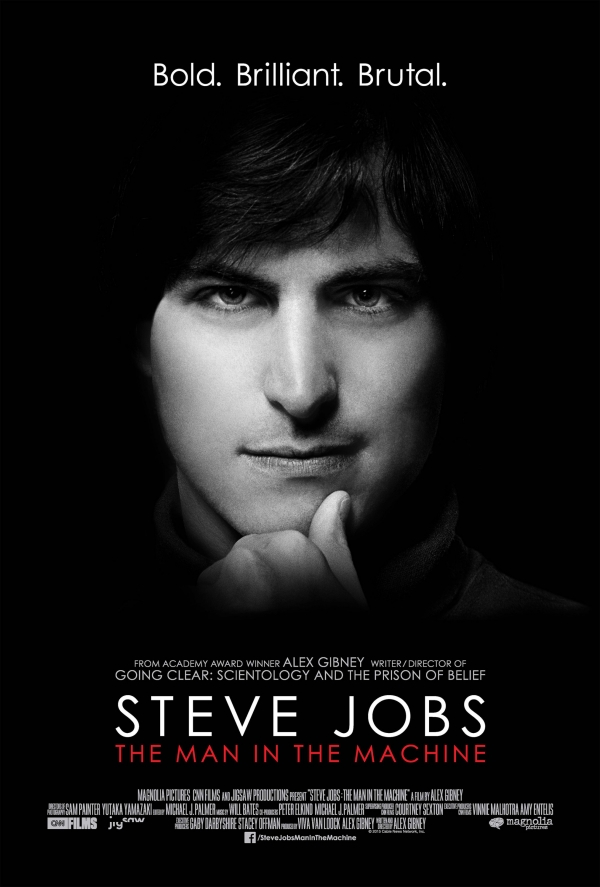
Since Steve Jobs’s death from cancer in 2011, the myths keep accumulating. Tim Adams assesses his legacy and speaks to Danny Boyle and Alex Gibney, directors of two new films – one a drama, the other a documentary – about the mysterious Apple boss
Subscribe to:
Posts (Atom)