Wednesday, May 31, 2023

Monday, June 15, 2020

Apple News algorithms pick more celeb stories than human editors, study finds

https://www.theguardian.com/technology/2020/jun/15/apple-news-algorithms-pick-more-celeb-stories-than-human-editors-says-study

Last month, Microsoft decided to replace all of the human editors who curate stories for the company’s MSN News service with algorithms that could do the same work.
Less than a week later, however, the robot editors had embroiled the company in a race row after illustrating a story about the Little Mix singer Jade Thirlwall with a picture of her bandmate Leigh-Anne Pinnock, the only other mixed-race member of the group. The algorithms then attempted to post a story about their own error, forcing the few remaining human editors to intervene.

Thursday, May 7, 2020

Prepare For The Death & Rebirth of Hollywood

https://medium.com/@RichardJanes/prepare-for-the-death-rebirth-of-hollywood-f3853aacbee0

Hit badly by COVID-19 with closed theme parks, cruise lines, and no live sporting events, we won’t see a cash purchase from Disney, but every shareholder of a failing movie exhibitor won’t pass up on the chance to see their certificates exchanged for notes that bear the mouse.

Disney already has over 200 retail stores in dying shopping malls across the country — just go to any business journal right now and look at how many retailers are reporting that they have stopped paying rent and they won’t be in a position to reopen many of their stores even once the all clear has been given. Shopping malls were already dying. This will be the final nail in the coffin for many of them.

Saturday, May 2, 2020

Studios bypass cinemas with lucrative lockdown premieres

https://www.theguardian.com/film/2020/may/02/studios-bypass-cinemas-with-lucrative-streaming-premieres-the-end

Universal’s latest on-demand hit, kept out of theatres by Covid-19, has made more profit in three weeks than its predecessor did in five months on the big screen

The closed Screen on the Green cinema in Islington, north London, with someone walking by

 The Screen on the Green in Islington, north London. Cinemas may be closed for some time. Photograph: Philip Sharkey/TGS Photo/Rex Shutterstock


Friday, April 24, 2020

Newspapers are enjoying a surge in popularity, but they're struggling to survive

https://www.theguardian.com/commentisfree/2020/apr/24/newspapers-journalists-coronavirus-press-democracy

Thomas Jefferson’s famous preference for “newspapers without a government”, if the alternative is government without newspapers, may be stretching a point. It remains strange that so vital a pillar of democracy as an independent and diverse press should be at the mercy of a private market. Over the years, that pillar has been damaged by chicanery, bias, vulgarity and sensation. Yet for all that and in most democracies, the market has more or less delivered. In the digital age, that is no longer guaranteed.


Thursday, April 23, 2020

Russian newspaper staff rebel against editor accused of censorship

https://www.theguardian.com/world/2020/apr/24/russian-newspaper-staff-rebel-against-editor-accused-of-censorship

On Wednesday, Ksenia Boletskaya, the newspaper’s media editor, wrote that Shmarov had banned the publication of polls by the independent pollster Levada because the Kremlin had opposed them, and that Shmarov had blocked reporters from criticising Putin’s plans to use constitutional amendments to “zero out” his presidential terms, potentially allowing him to hold power until 2036. “For failing to follow the bans, you’ll be fired,” Boletskaya wrote.
A number of independent outlets claim they have been censored by owners with pro-government views. In 2014, staff at the news website Lenta.ru complained of censorship and quit en masse after the site’s editor was dismissed. 
In 2016, a newly installed manager of RBC, another business news site, which had written about controversial topics including Putin’s children, told reporters there were “solid double lines” that the reporters had to be careful not to cross. Asked what those were, the manager replied: “Unfortunately, nobody knows where the solid double line is.”

Wednesday, April 15, 2020

Putin’s People review by Edward Lucas ~ part 2

The West largely missed this, focusing instead on the seeming triumph of democracy and capitalism. A second huge mistake was to misread Putin’s accession to power as a modernising moment, replacing the bumbling chaos and corruption of Yeltsin’s Kremlin with the cool efficiency of a well-run intelligence service.
Putin did bring order to Russia, of a kind. Belton vividly describes how the Kremlin tamed the “oligarchs”, the politically connected tycoons who in the 1990s had seemed more powerful than the state. But far from bringing plutocrats to heel, the Kremlin and its cronies simply looted their business empires and turned their media holdings into propaganda outlets for the regime. Again, the West greedily went along with these farcical auctions, nationalisations and tax raids.
Theft was accompanied by murder, inside Russia and abroad. Worse than the assassinations of leading critics were the bloody stunts pulled by the regime to manipulate public opinion. Belton provides damning evidence of what seemed like terrorist outrages that were staged or orchestrated by the authorities. Those who investigated were repressed inside Russia or dismissed as conspiracy theorists abroad.
One reason was greed. Another was that for 20 years after the Soviet collapse hawkish Russia experts in western government ministries and agencies were regarded as irrelevant at best, paranoid at worse. We are still repairing the damage caused by complacency.
Having consolidated economic and political power in Russia, the regime then began to rebuild its empire. This only sometimes involves brute force; far more effective is building networks of influence. Belton’s passages about Donald Trump’s business ties with Russia during the 1990s are particularly thought-provoking. It is tempting to speculate how much more she could have said about some other prominent people were it not for the constraints of English libel laws. But what she does describe is convincing, particular because of the careful sourcing from numerous witnesses and insiders.
In her epilogue Belton sharply changes tack. Just as Putin’s Russia is posing an increasing threat to the West, she argues, it is in trouble at home. “KGB capitalism” appears to be “calcifying and perhaps becoming unsustainable”, with Putin’s rule “in danger of becoming more brittle by the day”. She concludes that the former KGB men have merely repeated the mistakes of the past. Political and economic failure brought down the Soviet Union. It will do the same for Russia.
This judgment sits a little oddly with the rest of the book. The Russian regime has guns and money. No credible opposition is in sight. It can survive an oil price crash and an epidemic. Meanwhile, its great enemy, the western liberal order, is self-destructing before our eyes.

Putin’s People by Catherine Belton review — the most important book on modern Russia ~ Edward Lucas

The plot sounds like a geopolitical thriller. Amid an empire’s collapse, the secret police funnel money out of the country, creating a slush fund to rebuild their old networks. They regain power, become spectacularly rich and turn on their enemies, first at home — and then abroad.
That is fact, not fiction. Catherine Belton, for years a Moscow correspondent for the Financial Times, relates it with clarity, detail, insight and bravery. Books about modern Russia abound, delving into aspects such as corruption, spookdom, geopolitics, propaganda or the personalities who bestride the Kremlin’s corridors, notably Vladimir Putin. In 2014 the late Karen Dawisha, an American academic, overcame her publishers’ shameful cowardice to produce Putin’s Kleptocracy: Who Owns Russia?, a formidably researched book on theregime’s gangster roots and epic money laundering.


Belton has surpassed them all. Her much-awaited book is the best and most important on modern Russia. It benefits from a meticulous compilation of open sources, but also from the accounts of disillusioned Kremlin insiders, former business cronies and some remarkably candid people still high up in the system. The result is hair-raising.
Here is Belton relating an account of Putin’s close ties to an alleged St Petersburg mafia boss, Ilya Traber, in the early 1990s. A foreign businessman, arriving to discuss a municipal port project, gained a heart-stopping introduction to local business mores.

“He was whisked from the city’s Pulkovo airport straight to Traber’s lair, in an armoured car accompanied by police and Traber’s guards. On arrival at the high-gated compound in a back street, he was escorted past armed guards and snarling German shepherds. After passing through several rooms adorned with icons, he arrived at an inner chamber where Traber was waiting, wearing a tracksuit bottom and slippers, a thick chain with a huge gold cross around his neck — the uniform of the city’s bandits.”
After gaining a terse nod of approval for the project from Traber, the visiting westerner (who wisely goes unnamed in Belton’s account) was reportedly brought to a more conventional-seeming meeting at the offices of Traber’s lawyer. In truth, this seems even more alarming. Those apparently present included the official responsible for municipal property; the young Putin, at the time in charge of the city’s “foreign economic relations”; and Traber’s business partner, a respectable-looking young man — whose father just happened to be a KGB colleague of Putin’s.
The vignette — one of dozens in the book — exemplifies the hybrid that took shape in St Petersburg, mutated, and eventually took over Russia. It is a combination of the savviest elements of the old KGB and its cosmetically rebranded successor (the FSB), Russian officialdom, big business and gangsters.
The cast list is as extensive as it is lively. Anyone trying to tell this story in fiction would meet immediate demands to prune it. Belton, dealing with real life, has to stick to the facts. As with a Russian novel, readers will need to concentrate to remember who is who. A dramatis personae at the book’s start gives a flavour of what lies ahead. The first category she lists is Putin’s inner circle, the siloviki, or “men of power”.
Next come the “custodians”, KGB veterans with business empires. Many hold their wealth, she explains, not as owners, but trustees of the obschak, gangster slang for a kitty. The “family” are the Boris Yeltsin court, both relatives and hangers-on. In a last desperate throw of the dice after the Russian economy imploded in 1998 they turned to the former KGB in the hope of fending off a populist revolt. Unbeknown to them, Belton argues, they succumbed to a coup.
The final category is “mobsters”, whom she characterises as foot soldiers for the security services. Ties between the two camps were forged in the late Soviet era, when the secret police worked closely alongside black marketeers, partly to entrap foreigners, but also for mutually beneficial business deals.
For the story she tells is only partly about the former KGB’s seizure of power in Russia. It is also about its western accomplices and victims. She lays bare how western moneymen have been the enablers for the former Soviet Union’s gangsters, kleptocrats and spooks. This started in the declining years of the Soviet empire, when regime insiders, chiefly elements of the KGB, realised that the communist model of a planned economy and one-party state was doomed. They began to use their foreign connections, originally developed for espionage, technology theft and influence-peddling, for a new purpose: to build a lifeboat. The regime might go down, but they would survive.

Wednesday, December 18, 2019

Eliminating the Human ~ David Byrne

https://www.technologyreview.com/s/608580/eliminating-the-human/

David Byrne on Twitter

We are beset by—and immersed in—apps and devices that are quietly reducing the amount of meaningful interaction we have with each other.

Monday, December 16, 2019

Craven Arsenal abandon Mesut Özil over his stance on China’s Uighur persecution

https://www.theguardian.com/football/2019/dec/16/arsenal-mesut-ozil-uighurs-china

The decision by CCTV not to show Arsenal’s match against Manchester City is another reminder that there is no middle ground here. No way to stick up for human rights and free speech without angering China. You are either for such values or against them.
As Simon Chadwick, a professor of sports enterprise at Salford University who specialises in China, puts it: “The world is in the midst of an ideological battle: western liberalism versus eastern authoritarianism. And sport is one of the front lines.


Friday, December 13, 2019

Arsenal distance themselves from Mesut Özil comments on Uighurs’ plight

https://www.theguardian.com/football/2019/dec/13/arsenal-distance-themselves-from-mesut-ozil-comments-china-uighur-people

20180602 FIFA Friendly Match Austria vs. Germany Mesut Özil 850 0704.jpg

The club sought to limit any damage caused to its business in China, where it has numerous commercial interests including a chain of restaurants, by releasing a statement on Weibo – a leading Chinese social media site – as well as other platforms stressing it is apolitical and does not associate itself with Özil’s views.

Thursday, December 12, 2019

Russian TV axes show starring Ukraine's leader after Putin joke

https://www.theguardian.com/world/2019/dec/12/russian-tv-axes-show-starring-ukraines-leader-after-putin-joke-volodymyr-zelenskiy

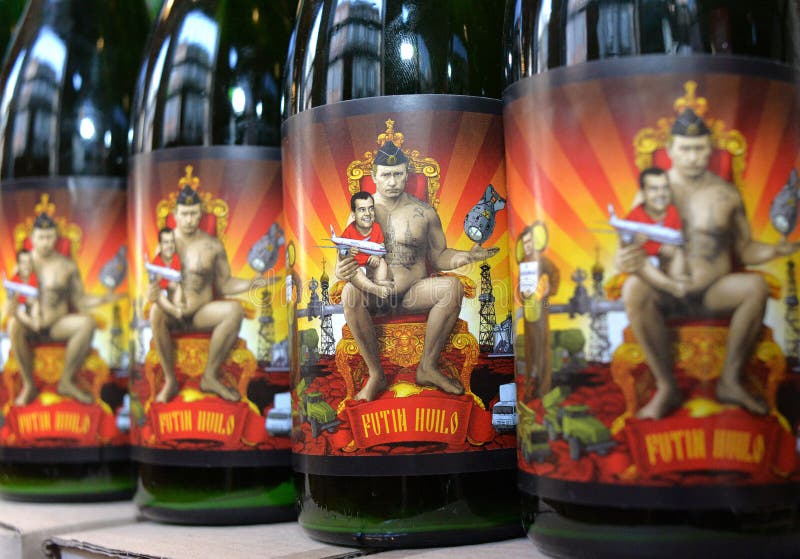
Lviv, Ukraine - Mar 26, 2015:A bottles of beer featuring Russian

The word Hublot resembles another that translates, less crudely, to the word “dick” in Russian’s swearing sub-language known as Mat. The phrase “Putin’s a dick”, using the swearword, became a popular slogan in Ukraine after the outbreak of the conflict in south-east Ukraine, and could be heard at anti-Putin rallies and seen in graffiti dabbed on walls across Ukraine.

Tuesday, December 10, 2019

Amazon breaks into Champions League with German deal

https://www.theguardian.com/media/2019/dec/10/amazon-sky-champions-league-germany-premier-league-football

Under the three-year deal, Sky Deutschland is the main rights holder and sub-licensed a smaller package of games to DAZN, which reportedly paid an estimated €600m (£505m). The deal, which runs until 2020-21, marks the first time that no Champions League games have aired on free-to-air TV in Germany, after the public broadcaster ZDF was outbid.


Sunday, December 8, 2019

China tells government offices to remove all foreign computer equipment

https://www.theguardian.com/world/2019/dec/09/china-tells-government-offices-to-remove-all-foreign-computer-equipment

The government directive is likely to be a blow to US multinational companies like HP, Dell and Microsoft and mirrors attempts by Washington to limit the use of Chinese technology, as the trade war between the countries turns into a tech cold war.