
Monday, October 31, 2016
Sunday, October 30, 2016
Vine-al countdown: fans share favourite Vines before app shuts down
https://www.theguardian.com/technology/2016/oct/30/vine-al-countdown-fans-share-favourite-vines-before-app-shuts-down
Users of the platform remind us what we stand to lose when this weird and wonderful corner of the internet ceases to exist
Users of the platform remind us what we stand to lose when this weird and wonderful corner of the internet ceases to exist


Saturday, October 29, 2016
Meet the super-agent behind Pogba and Ibrahimovic ~ Simon Kuper
https://www.ft.com/content/548155cc-9bcf-11e6-b8c6-568a43813464

![]()
This chubby, bespectacled little Dutch-Italian is arguably the world’s most influential football agent. It’s no coincidence that Manchester United this summer signed three of his clients: Paul Pogba (for a world record transfer fee of £89.3m), Zlatan Ibrahimovic and Henrikh Mkhitaryan. Raiola’s select stable also includes Mario Balotelli, the great unfulfilled talent of the current generation. Like Raiola or hate him (as Sir Alex Ferguson does), he helps shape the transfer market. He is one of the major forces determining which players end up at which clubs.
![]()
![]()
![]()
![]()

This chubby, bespectacled little Dutch-Italian is arguably the world’s most influential football agent. It’s no coincidence that Manchester United this summer signed three of his clients: Paul Pogba (for a world record transfer fee of £89.3m), Zlatan Ibrahimovic and Henrikh Mkhitaryan. Raiola’s select stable also includes Mario Balotelli, the great unfulfilled talent of the current generation. Like Raiola or hate him (as Sir Alex Ferguson does), he helps shape the transfer market. He is one of the major forces determining which players end up at which clubs.


Friday, October 28, 2016
Angela Merkel: internet search engines are 'distorting perception'
https://www.theguardian.com/world/2016/oct/27/angela-merkel-internet-search-engines-are-distorting-our-perception
A lack of transparency about algorithms is endangering debate, German chancellor tells media conference
A lack of transparency about algorithms is endangering debate, German chancellor tells media conference

Thursday, October 27, 2016
Angling for the future of TV
http://www.economist.com/news/business/21709345-huge-merger-tries-follow-change-way-people-watch-television-angling

IMAGINE a television which, as in the old days, has only a handful of channels to choose from instead of hundreds, as a typical cable set-up might offer today. In a decade or so TVs will once again have only a few channels, but each will run miles deep, with content that can be viewed on demand. Netflix might be one such offering; Amazon another. Both firms are spending billions of dollars making and buying TV shows and films to sell directly to viewers to watch when they like, and on devices other than the box in the corner of the room. And other rich tech firms may join them.
IMAGINE a television which, as in the old days, has only a handful of channels to choose from instead of hundreds, as a typical cable set-up might offer today. In a decade or so TVs will once again have only a few channels, but each will run miles deep, with content that can be viewed on demand. Netflix might be one such offering; Amazon another. Both firms are spending billions of dollars making and buying TV shows and films to sell directly to viewers to watch when they like, and on devices other than the box in the corner of the room. And other rich tech firms may join them.
The value of gun-toting film stars
http://www.economist.com/blogs/graphicdetail/2016/10/daily-chart-15
But gun-toting may bring actors more than just moral satisfaction. The number of different guns an actor has handled in films is strongly correlated with Ulmer scores, which measure an actor’s bankability—or ability to draw financing—on a scale from 0 to 300. This trend holds even when controlling for the total number of acting credits. Denzel Washington seems to hold a different gun in each movie in which he stars.
But gun-toting may bring actors more than just moral satisfaction. The number of different guns an actor has handled in films is strongly correlated with Ulmer scores, which measure an actor’s bankability—or ability to draw financing—on a scale from 0 to 300. This trend holds even when controlling for the total number of acting credits. Denzel Washington seems to hold a different gun in each movie in which he stars.
Tuesday, October 25, 2016
Techno wars - The Economist
http://www.economist.com/news/business/21709062-earlier-sunny-mood-about-technology-and-innovation-has-given-way-pessimism-techno-wars

The real question is not whether the IT revolution has run out of steam or whether creative destruction is grinding to a halt. In fact, the IT revolution is probably gathering pace and Google and Amazon are two of the most innovative firms to emerge in the past 50 years. Rather it is whether the new economy can counteract the forces ranged against it: ageing populations; a political class responding to populism by restricting trade and by over-regulating business; and education systems that in many places are failing. The big danger is that, while optimists and pessimists battle it out, the world becomes ever more divided between islands of high productivity surrounded by a vast ocean of stagnation.
The real question is not whether the IT revolution has run out of steam or whether creative destruction is grinding to a halt. In fact, the IT revolution is probably gathering pace and Google and Amazon are two of the most innovative firms to emerge in the past 50 years. Rather it is whether the new economy can counteract the forces ranged against it: ageing populations; a political class responding to populism by restricting trade and by over-regulating business; and education systems that in many places are failing. The big danger is that, while optimists and pessimists battle it out, the world becomes ever more divided between islands of high productivity surrounded by a vast ocean of stagnation.
Monday, October 24, 2016
How guns get into films
http://www.economist.com/blogs/prospero/2016/10/bang-your-buck

Given that a number of prominent actors—Matt Damon, Sigourney Weaver, George Clooney, Jodie Foster and Sylvester Stallone, to name a handful—are in favour of gun control, a public repudiation of firearms would have a significant effect on the industry. It would help, too, if free advertising was eradicated by film companies by demanding expensive product placement contracts from manufacturers. Actions films and the requisite guns would of course still have a place on the silver screen—but it might limit the collateral damage.
Given that a number of prominent actors—Matt Damon, Sigourney Weaver, George Clooney, Jodie Foster and Sylvester Stallone, to name a handful—are in favour of gun control, a public repudiation of firearms would have a significant effect on the industry. It would help, too, if free advertising was eradicated by film companies by demanding expensive product placement contracts from manufacturers. Actions films and the requisite guns would of course still have a place on the silver screen—but it might limit the collateral damage.
AT&T and Time Warner plot a blockbuster media future
http://www.economist.com/news/business-and-finance/21709150-combination-huge-distributor-tv-leading-content-producer-bold
Time Warner has been here before. In 2000 its $350bn merger with AOL was the largest in American history. It was meant to be the dawn of a new era dominated by internet giants. That deal was a disaster that cost thousands of jobs and destroyed hundreds of billions of dollars in combined market value for the two firms (AOL spun off in 2009 and was acquired by Verizon last year for $4.4bn). Now Time Warner becomes part of a megadeal in another business with an interesting but uncertain future.
Time Warner has been here before. In 2000 its $350bn merger with AOL was the largest in American history. It was meant to be the dawn of a new era dominated by internet giants. That deal was a disaster that cost thousands of jobs and destroyed hundreds of billions of dollars in combined market value for the two firms (AOL spun off in 2009 and was acquired by Verizon last year for $4.4bn). Now Time Warner becomes part of a megadeal in another business with an interesting but uncertain future.
Sunday, October 23, 2016
AT&T agrees to buy Time Warner for $85bn
https://www.theguardian.com/media/2016/oct/22/att-buy-time-warner-donald-trump
Telecoms companies are increasingly seeking to buy into cable TV providers and content producers, in order to offer more extensive packages to consumers. AT&T spent $48bn buying the satellite TV provider DirecTV last year, making it the country’s largest pay-TV provider, with 25 million customers. The company has also spent hundreds of millions improving its infrastructure to give consumers a better experience watching video content on their mobile phones.
https://www.ft.com/content/4714e3f4-98cd-11e6-8f9b-70e3cabccfae
Telecoms companies are increasingly seeking to buy into cable TV providers and content producers, in order to offer more extensive packages to consumers. AT&T spent $48bn buying the satellite TV provider DirecTV last year, making it the country’s largest pay-TV provider, with 25 million customers. The company has also spent hundreds of millions improving its infrastructure to give consumers a better experience watching video content on their mobile phones.
https://www.ft.com/content/4714e3f4-98cd-11e6-8f9b-70e3cabccfae

Saturday, October 22, 2016
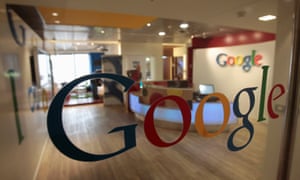
Google’s tracking is as creepy as Facebook's. Here’s how to disable it
https://www.theguardian.com/technology/2016/oct/21/how-to-disable-google-ad-tracking-gmail-youtube-browser-history
In practice, this means that Google can now, if it wanted to, build up even richer profiles of named individuals’ online activity. It also means that the DoubleClick ads that follow people on the web could be personalized based on the keywords that individuals use in Gmail.
In practice, this means that Google can now, if it wanted to, build up even richer profiles of named individuals’ online activity. It also means that the DoubleClick ads that follow people on the web could be personalized based on the keywords that individuals use in Gmail.
Subscribe to:
Posts (Atom)